How Real Estate Agents Can Build Their Own Business Empire (Instead of Building Someone Else's)
How Real Estate Agents Can Build Their Own Business Empire (Instead of Building Someone Else's)
Jun 11, 2026
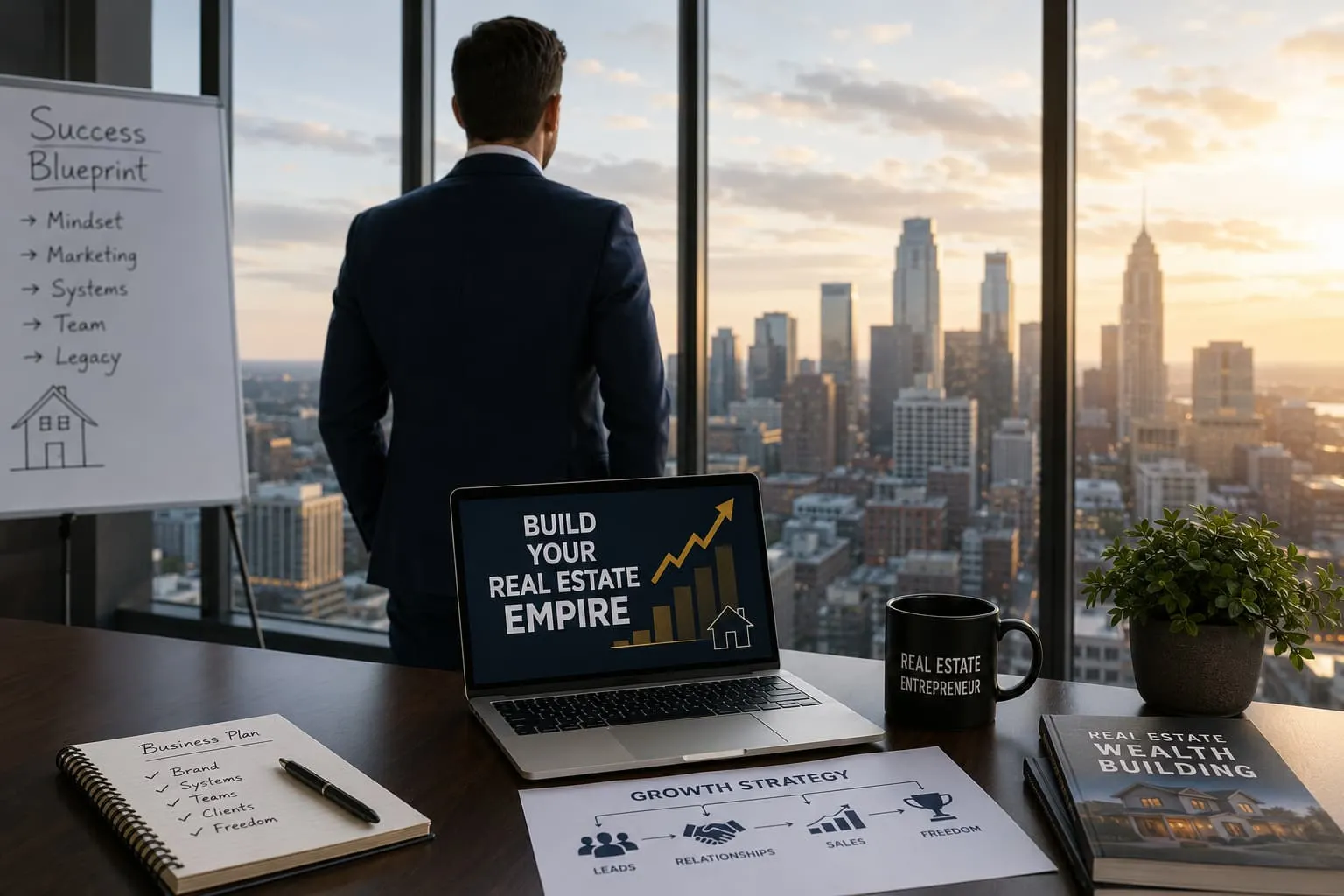
Learn how real estate agents can scale a business, evaluate brokerage models, and grow through collaborative real estate networks. Discover the real estate business growth stages that take agents from solo production to a scalable empire with the Super Agents Collaborative.
Real Estate Agents Can Build an Empire — Here's the Short Answer
Real estate agents can build their own business empire by approaching their career as an entrepreneurial venture rather than simply operating within a brokerage structure. By choosing brokerage environments that provide strong technology platforms, mentorship, collaboration, and scalable systems, agents can grow their brand, build referral networks, develop teams, and expand their business beyond individual transaction-based income — eventually building toward the kind of residual income that supports a real retirement plan.
Finding the right brokerage model is one of the most important decisions a real estate professional will make. As the industry continues to evolve, many agents are exploring new environments that provide stronger support systems, better technology platforms, and opportunities to build scalable businesses.
What Is a Scalable Real Estate Business?
A scalable real estate business is one that can grow in size, revenue, and operational capacity without requiring the agent to personally manage every transaction. In traditional real estate models, income is often directly tied to personal production. If an agent wants to increase revenue, they must close more deals themselves.
A scalable business operates differently. It includes systems, partnerships, and structures that allow the business to grow while maintaining efficiency. These systems might include referral relationships, operational support, team structures, marketing automation, eXp Realty revenue share, and integrated technology platforms. When these components are in place, agents can expand their reach, increase brand recognition, and generate revenue through multiple channels.
The Real Estate Business Growth Stages Every Agent Should Know
Real estate professionals who successfully build long-term businesses often move through recognizable growth stages. They begin in personal production, then move toward leverage by adding systems and support. From there, they build teams and referral relationships, then expand into multiple markets and revenue streams. Finally, they reach a stage where the business generates income that no longer depends entirely on their personal effort.
Understanding these real estate business growth stages matters because most agents get stuck in the first one. They spend their entire careers trading time for commissions, never realizing there is a path toward a scalable enterprise — and eventually, a real estate agent retirement plan built on residual income rather than savings alone.
Challenges in Traditional Brokerage Structures
While traditional brokerage environments have supported many successful careers, some agents encounter limitations when trying to scale. One of the most common challenges is that income remains closely tied to personal production. Another involves limited collaboration, where brokerage cultures emphasize individual competition rather than knowledge sharing. Agents may also encounter limitations related to infrastructure: without integrated technology, marketing systems, or structured training, agents often need to develop these resources independently.
In addition, traditional brokerage hierarchies can sometimes restrict flexibility. Agents who want to build teams, expand into additional markets, or create referral-based business models may encounter structural barriers that slow their progress. These challenges have contributed to growing interest in alternative brokerage models designed to support entrepreneurial real estate professionals.
The Role of Collaborative Real Estate Networks
One of the most notable developments in the modern real estate industry is the rise of collaborative real estate networks. These environments provide spaces where professionals can share knowledge, collaborate on strategies, and support each other's business growth while maintaining independence. Mentorship often plays a central role. Experienced professionals provide training sessions, business insights, and guidance that help other agents expand their operations.
Technology infrastructure also supports these networks. Digital platforms allow agents to connect across multiple markets, access educational resources, and manage their business operations more effectively. Referral relationships are another key component. By connecting with agents across different regions, professionals can expand their reach and generate additional opportunities through trusted partnerships.
A Collaborative Environment in Practice: Super Agents Collaborative
Organizations such as the Super Agents Collaborative, a Denver-based group powered by eXp Realty, illustrate how collaborative real estate networks can support an agent's growth into a full business. Within these environments, agents participate in mentorship programs, training sessions, and professional discussions focused on expanding their real estate businesses. The culture emphasizes cooperation rather than competition.
Technology infrastructure plays an important role. Digital platforms allow agents to connect with colleagues nationwide, attend virtual training, and access tools designed to support daily business activities. Referral networks within collaborative environments can extend across national and international markets. In many cases, agents also explore strategies for building teams, expanding geographically, building passive income through revenue share, and developing systems that allow their real estate business to grow sustainably toward a long-term retirement plan.
Key Insights for Real Estate Professionals
Many successful agents approach their careers with an entrepreneurial mindset. Choosing the right brokerage environment plays a major role in real estate agent business growth. Collaborative networks can provide mentorship, professional relationships, and knowledge sharing. Technology infrastructure is increasingly essential for scaling. And modern brokerage models, like eXp Realty through the Super Agents Collaborative, are evolving to support agents who want to build sustainable, long-term enterprises.
The real estate profession offers significant opportunities for individuals who approach their careers with an entrepreneurial perspective. Rather than focusing solely on individual transactions, many agents now concentrate on building systems, partnerships, and networks that allow their business — and eventually their retirement income — to grow over time. For agents interested in building a real estate business designed for long-term growth, researching brokerage models carefully and understanding the available resources can help create a sustainable and scalable real estate empire.
Ready to Build Your Own Real Estate Empire?
Super Agents Collaborative helps agents, team leads, and broker owners in Denver build scalable businesses through eXp Realty — with the mentorship, technology, revenue share, and collaborative network to grow beyond transactions and toward a real retirement plan.
- Schedule a conversation: https://calendly.com/barryoverton
- Explore retiring from real estate: https://superagentscollaborative.com/retire-from-real-estate
- Learn about the collaborative: https://superagentscollaborative.com